Free sample · Grade 4
Science
Try an answer. Explore the help. Take your time.
5 questions · no timer · the same teaching help as Daily Practice
Competition and Limited Resources
Using the dense forest canopy scenario, which prediction is most reasonable?
A forest has experienced several years of growth. The tree canopy becomes much denser.
Show hint
The science behind this question
Plants compete for sunlight, water, soil nutrients, and growing space.
Observe ecosystems without disturbing organisms, nests, burrows, shelters, soil, water, or plant communities.

Show a worked example
A separate practice example
Follow the strategy here. This example has its own information and answer.
- A. Every population grows forever.
- B. An environment can support only a limited number of organisms over time.
- C. Carrying capacity depends only on predators.
- D. Carrying capacity never changes.
- The correct answer is B: An environment can support only a limited number of organisms over time.. As populations approach carrying capacity, more individuals use the same resources, so competition generally increases.
Answer to this example only: An environment can support only a limited number of organisms over time.
Separating Mixtures
Which separation method is best for mixed buttons?
Show hint
The science behind this question
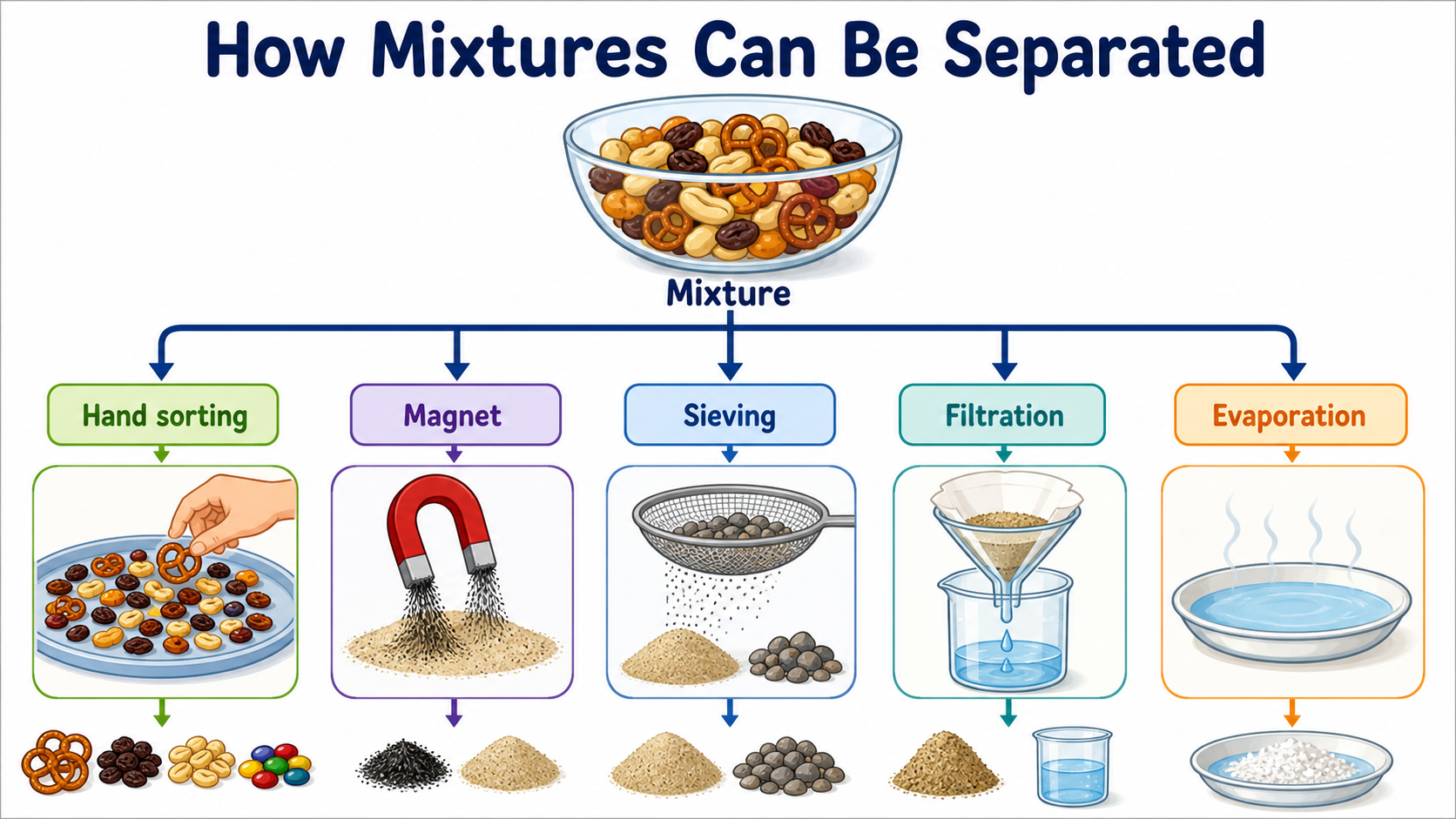
Hand sorting works when pieces are large, visible, and easy to pick apart.
Memory tips: visible large pieces -> hand sorting.
Show a worked example
A separate practice example
Follow the strategy here. This example has its own information and answer.
- A. Mixtures cannot be separated.
- B. Separation destroys matter.
- C. Separation always changes substances into new materials.
- D. Mixtures can often be separated because their substances remain physically combined rather than chemically joined.
- The correct answer is D: Mixtures can often be separated because their substances remain physically combined rather than chemically joined. Mixtures are physically combined, so separating them is usually a physical change and does not create a new substance.
Answer to this example only: Mixtures can often be separated because their substances remain physically combined rather than chemically joined.
Magnets and Electromagnets
Which statement best explains why a junkyard crane can release scrap metal?
Show hint
The science behind this question
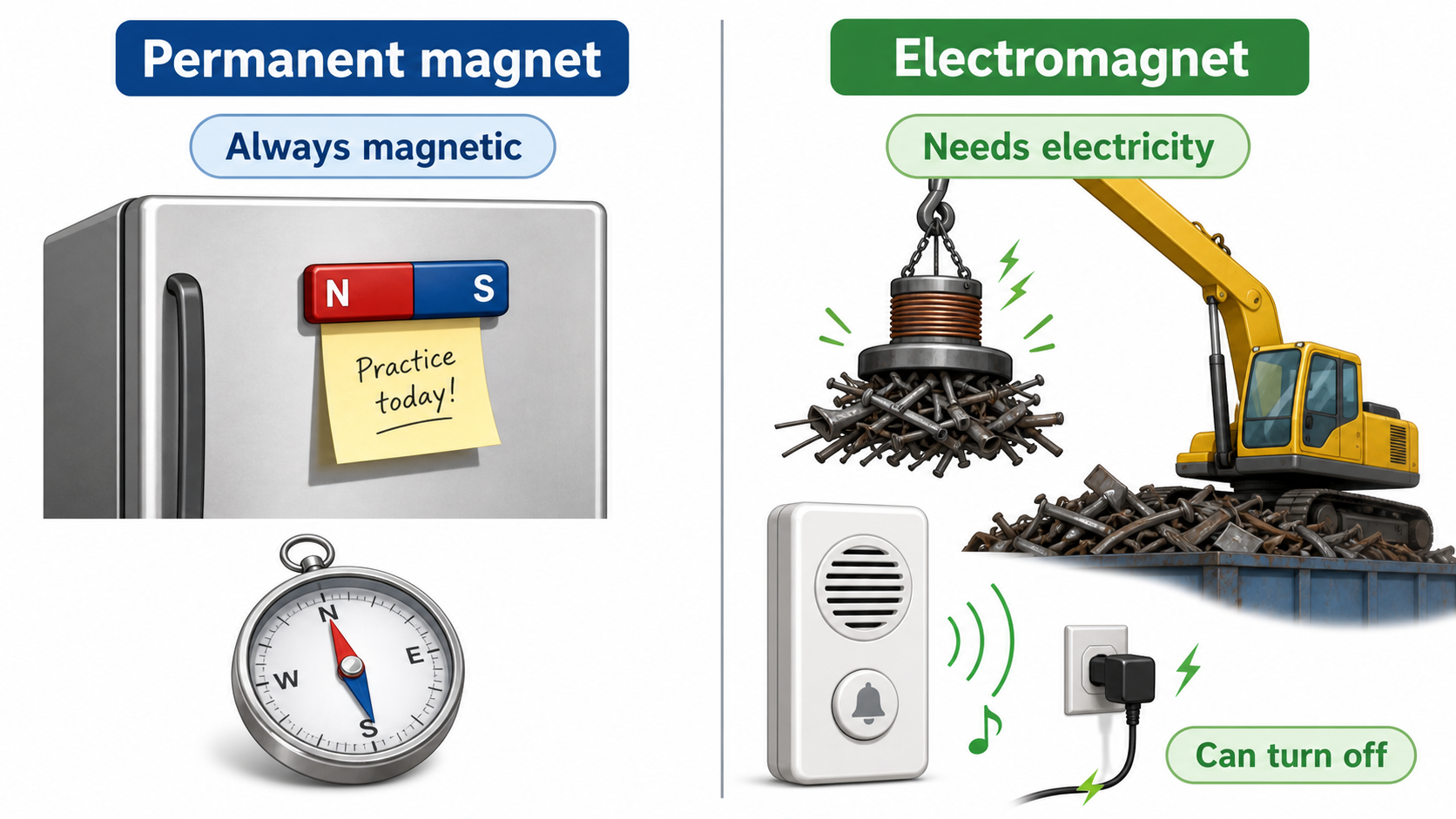
Electromagnets need electricity and can be switched on and off.
When the battery is disconnected, current stops and the electromagnet loses most of its magnetism.
Show a worked example
A separate practice example
Follow the strategy here. This example has its own information and answer.
- A. North and South only
- B. Opposite poles
- C. North and North
- D. North and South
- Like poles repel, so north and north repel.
Answer to this example only: North and North
Natural Hazards
Which statement best explains why emergency planning is important?
Show hint
The science behind this question
People cannot stop most natural hazards, but they can prepare by listening to weather forecasts, following evacuation orders, practicing emergency plans, moving to safe shelter, and preparing emergency supplies.
A natural hazard is a natural event that can harm people, property, plants, animals, or the environment.

Show a worked example
A separate practice example
Follow the strategy here. This example has its own information and answer.
- A. Tornado
- B. Flood
- C. Hurricane
- D. Drought
- The correct answer is A: Tornado. Tornadoes usually form over land from thunderstorms and have strong rotating winds along a narrow damage path.
Answer to this example only: Tornado
Gravity and Orbits
What keeps Earth orbiting the Sun?
| Idea | Key clue |
|---|---|
| gravity | pulls objects toward one another |
| Earth gravity | pulls objects toward the ground |
| Sun gravity | keeps Earth in orbit |
| Earth gravity | keeps the Moon in orbit |
| orbit | path around another object because of gravity |
Gravity pulls; it does not push objects apart.
Gravity is a pulling force that works on Earth and in space.
Show hint
The science behind this question
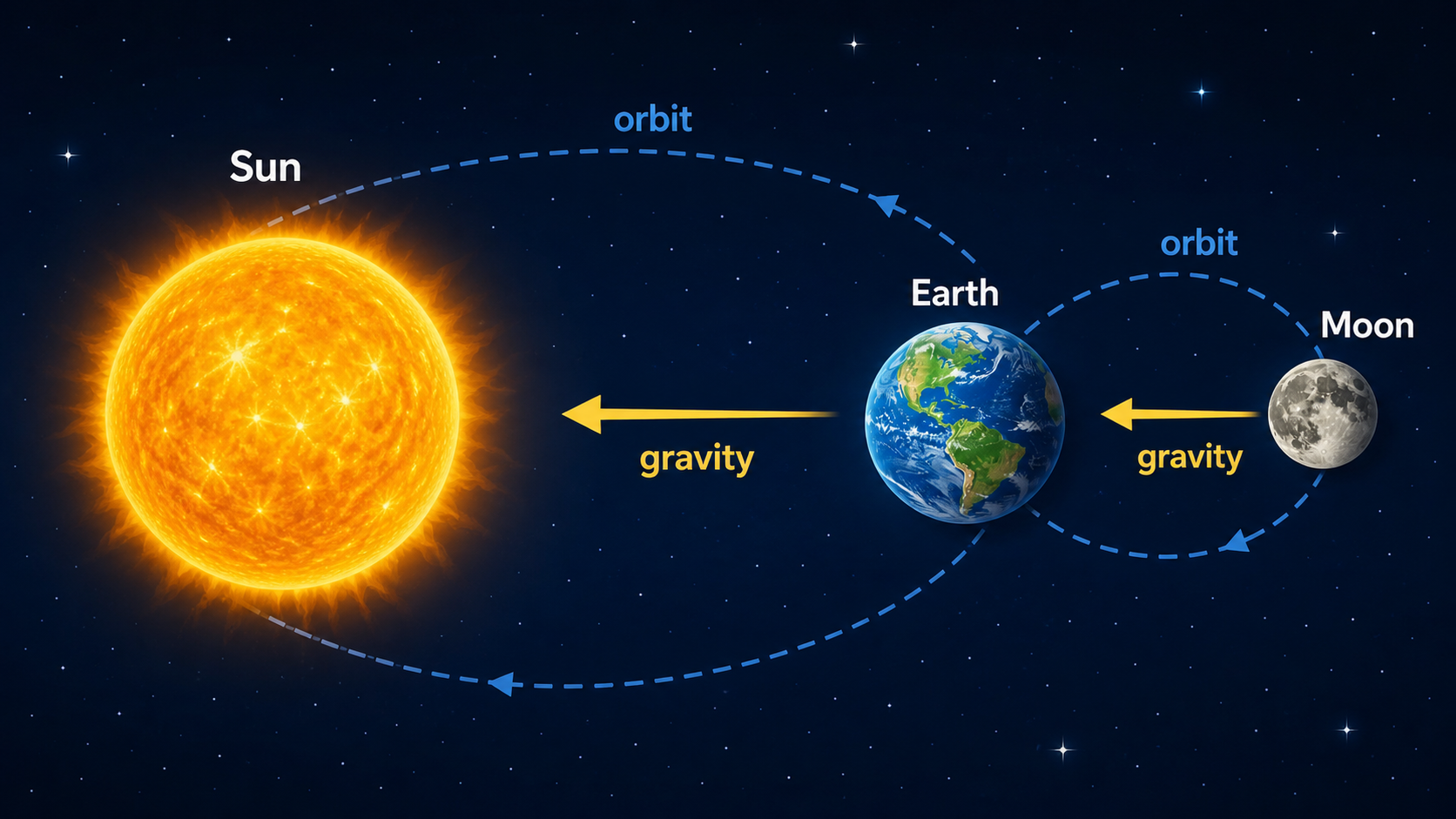
The Sun's gravity keeps Earth traveling around the Sun, and Earth's gravity keeps the Moon traveling around Earth.
On Earth, gravity pulls objects toward the ground, keeps people on the surface, and helps hold the atmosphere close to the planet.
Show a worked example
A separate practice example
Follow the strategy here. This example has its own information and answer.
| Type | Example | Clue |
|---|---|---|
| natural satellite | Moon | formed naturally |
| artificial satellite | GPS satellite | built by people |
| artificial satellite | weather satellite | built by people |
| artificial satellite | communication satellite | built by people |
| not a satellite | Sun | star at the center of the Solar System |
The Moon is Earth's natural satellite.
A satellite is an object that orbits another object.
- A. Earth is the Moon's satellite.
- B. The Moon is a planet.
- C. The Moon is an artificial satellite.
- D. The Moon is Earth's natural satellite.
- The correct answer is D: The Moon is Earth's natural satellite. A satellite is an object that orbits another object; the Moon is natural, and artificial satellites are built by people.
Answer to this example only: The Moon is Earth's natural satellite.
Five questions explored
You took the first step.
You tried Science and explored how to work through a question. Every step is a chance to learn.
For parents · Grade 4
Find your child’s next step.
This short sample shows the questions and teaching help used in Daily Practice. It doesn’t measure readiness for a test or contest.
A Free Skills Check can help you choose where to begin. Plans explain the full program, including practice routines and progress tracking.